
Principle Overview
Sisu is a Finnish concept commonly associated with extraordinary perseverance, resilience, and inner strength in the face of adversity. The English word “determination” can be a useful starting point, but no single translation fully captures the meanings created through Finnish language, history, and lived experience.
Sisu has no single direct English translation. It is often rendered as grit, courage, resilience, determination, tenacity, or strength of will. Each word captures part of the idea. None contains it completely.
Universal Mindset therefore approaches Sisu carefully. We do not present Sisu as a complete philosophy of the Finnish people, nor do we claim that our modern character-development framework represents traditional Finnish doctrine. Instead, we begin with the human challenge of continuing when comfort ends and ask what that challenge can teach us about dependable character.
Cultural Context
Sisu developed within Finnish language and culture and has been used for centuries. Its meaning cannot be reduced to a single historical event, environmental condition, or personality trait.
Finland’s geography, climate, history, and collective experiences provide part of the broader context in which Sisu has been understood and expressed. Yet Sisu should not be explained as though difficult weather automatically created Finnish character. Culture is more complex than any single cause.
Over time, Sisu became closely associated with Finnish understandings of determination, courage, action, and the capacity to continue through adversity. Its cultural importance also reminds us that concepts of strength emerge within particular languages, histories, communities, and lived experiences.
Cultural review: research-based cross-reference review completed for this issue. Limitations are disclosed in Sources & Limitations below.
Sisu becomes especially meaningful when adversity asks more of us than we believed we had available.

Why It Mattered
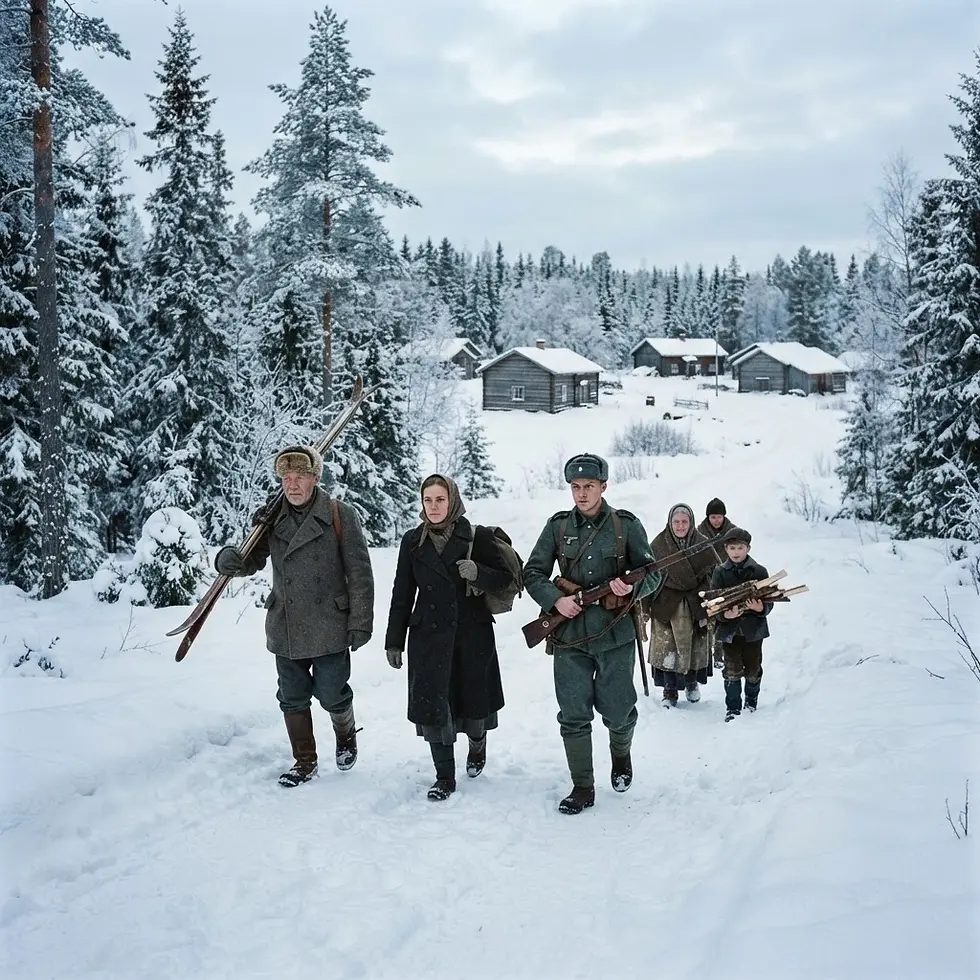
Then, on November 30, 1939, Soviet forces invaded without a declaration of war. The imbalance was severe. Finland faced an opponent with far greater manpower and equipment. Its defense depended on disciplined leadership, field defenses, camouflage, mobility, knowledge of terrain, and the ability to operate in severe winter conditions.
The war lasted 105 days. Finland preserved its independence, but more than 25,000 Finns died in the war effort, about 44,000 were wounded, and more than 1,000 civilians were killed. Finland ceded 11 percent of its territory, and approximately 430,000 people lost their homes.
The Winter War was not a motivational parable. It was a national emergency lived by soldiers, families, medical workers, political leaders, and civilians who faced choices with no painless outcome. Sisu did not make the winter warmer or guarantee victory. It named the capacity to remain available to necessary action after comfort, confidence, and familiar strength had been stripped away.
Human Question
How do we continue when continuing becomes difficult?
What happens to our character when comfort, certainty, energy, or easy choices disappear?
Universal Mindset Application
The following framework is a modern Universal Mindset synthesis inspired by this research. It is not a traditional Finnish doctrine and should not be mistaken for a complete definition of sisu.
1. Endurance
Remain present through the difficult interval when energy, recognition, and reassurance are absent. Endurance is not passive suffering. It is the refusal to abandon a worthy responsibility simply because the work has become uncomfortable.
2. Integrity
Hold the standard when pressure makes compromise attractive. If endurance requires abandoning conscience, safety, or truth, it has lost its direction.
3. Calm Resolve
Regulate the response so fear, anger, fatigue, or urgency does not decide the behavior for you.
4. Purposeful Action
Move deliberately toward what matters. Sisu is not frantic motion or stubborn repetition; it is directed action open to adaptation.
5. Moral Courage
Choose the harder right over the easier wrong. Moral courage prevents determination from becoming harm.
Character Over Image
Sisu is more useful as a practice than as a label. The question is not whether a person permanently possesses it. The question is whether a particular choice expresses wise fortitude in a particular moment. Redirect the energy spent preserving an image toward the work, the people, and the purpose that matter.
Dependability Test Connection
Sisu becomes part of dependable character only when perseverance remains accountable to all six dimensions of the Universal Mindset Dependability Test.
Integrity: Continue without sacrificing truth.
Responsibility: Carry obligations that genuinely belong to you.
Competence: Develop the strength, skill, and preparation needed.
Relationship: Remember that your persistence affects other people.
Judgment: Know when continuing serves the purpose.
Contribution: Direct endurance toward something that creates value beyond personal recognition.
Integrity
Continue without sacrificing truth. True Sisu does not hide from reality or use persistence to mask a failure of character.
Responsibility
Carry obligations that genuinely belong to you. Persistence matters most when it protects commitments made to others rather than personal ego.
Competence
Develop the strength, skill, and preparation needed. Sisu is not reckless; it is the application of prepared energy during the final stretch.
Relationship
Remember that your persistence affects other people. Endurance should build communities rather than isolating the individual in a performance of toughness.
Judgment
Know when continuing serves the purpose. Character requires recognizing when evidence requires rest, adaptation, or a responsible change in course.
Contribution
Direct endurance toward something that creates value beyond personal recognition. Sisu is a tool for the mission, not the highlight of a personal brand.
Sources & Limitations
Sources
Emilia Elisabet Lahti, “Embodied fortitude: An introduction to the Finnish construct of sisu,” International Journal of Wellbeing, 2019; Henttonen and colleagues, “A measure for assessment of beneficial and harmful fortitude,” Heliyon, 2022; Khan and colleagues, “Understanding the impact of sisu on workforce and well-being,” Heliyon, 2024; Antikainen and colleagues, “Mental fortitude in everyday life,” International Journal of Wellbeing, 2025; Finnish Government material on the Winter War; International Olympic Committee material on Paavo Nurmi; Sports Museum of Finland; European Environment Agency; Finnish Meteorological Institute; and Encyclopaedia Britannica.
Limitations
The responsible way to learn from Sisu is neither to universalize Finland nor to imitate a national identity. Study the conditions in which the idea gained meaning, then ask where a similar threshold appears in our own responsibilities.
Discussion Prompt
What responsible action remains possible while fear is present?
Community reflection
Continue Learning

Issue #7
Māori Mana: The Internal Anchor

Issue #2
Bushido: The Way of Ethics

The Core
Character: The Universal Test

Continue the Journey
Related Resources
Related Book Chapter: Book One · Chapter 1 · Sisu
Next Principle: Issue #2 · Bushido – What Should Strength Serve?
Every culture has developed ideas that helped people navigate life’s most important challenges. Universal Mindset explores those ideas through history, culture, character, and practical application.
Different Peoples. Shared Humanity.
Next Issue
Issue #2 · Bushido